Client dinners in Makati: a host's guide to getting it right
You book the room, seat the guest of honour, keep the bill in a number you already know, and get everyone out before close. This is the sequence — for the person who has to book, host and pay.
6 min read
Short answer
Hold a private room first — a VIP room seats 6–8 behind a sliding door — then set one kaiseki course for the whole table from ₱8,000 per guest. There is no per-head minimum spend; a 5% deposit of the estimated bill holds the room, and the balance is settled at the restaurant. VAT is included in the course price; a 10% service charge is added on the night. Plan two hours, and leave the Makati CBD with traffic in mind: we close at 23:00, or 24:00 on Friday and Saturday.
A business dinner in Makati is six decisions, in order. Book the room first. Set one course. Seat the guest of honour. Decide the drinks. Time the meal. Settle the bill yourself. Get those wrong and you spend the evening managing the table instead of the relationship. If you are deciding where to take clients to dinner in Manila, start with the room, not the plate.
We host these dinners at Daimasu, on the ground floor of Allegro Center, 2284 Chino Roces Avenue Extension, Magallanes — about ten minutes by car from the Makati CBD, near Magallanes MRT. Staff speak Japanese and English. For a group proposal, start on corporate dining. Room layouts are on our rooms; capacities in the private-room note.
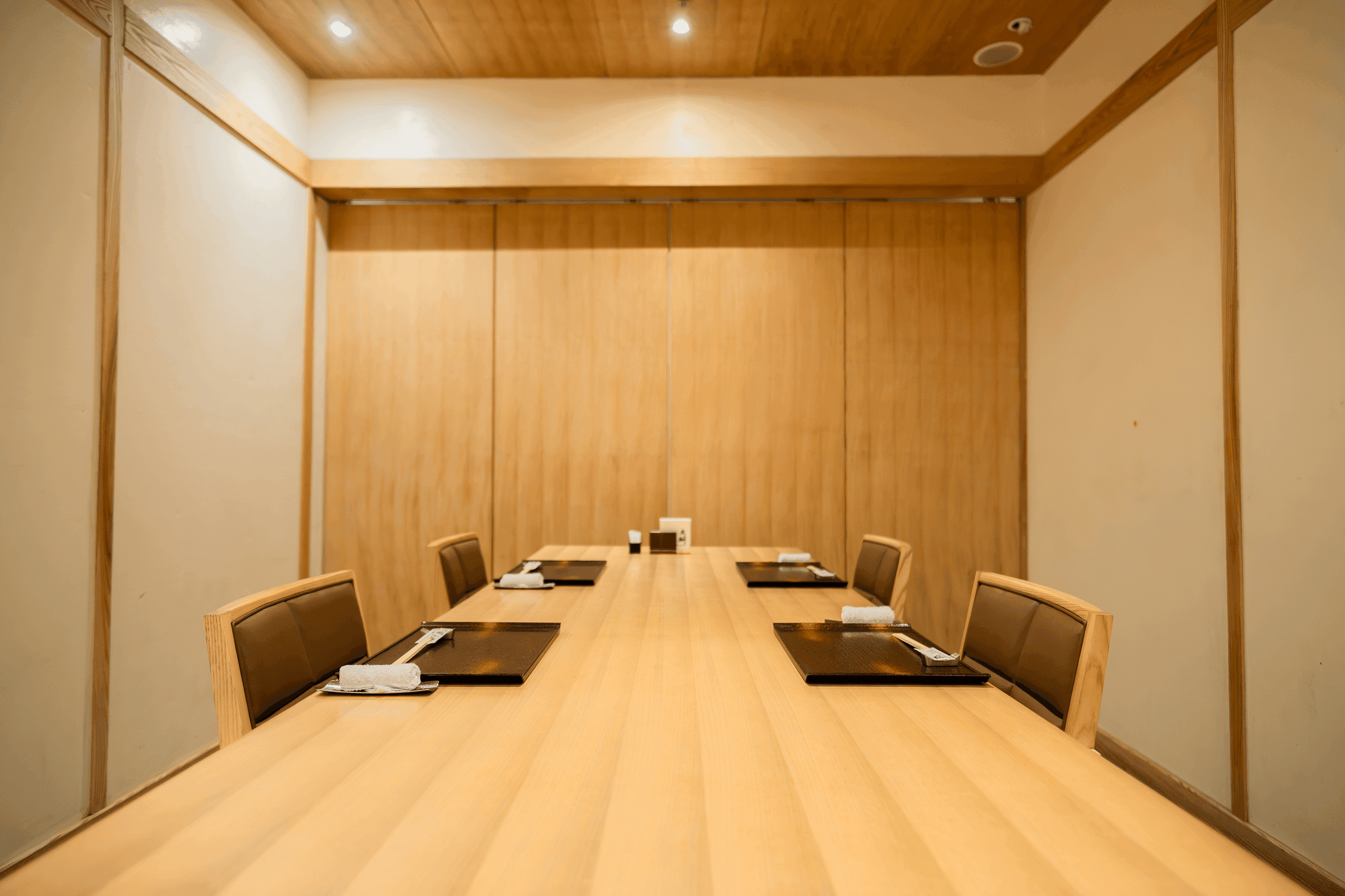
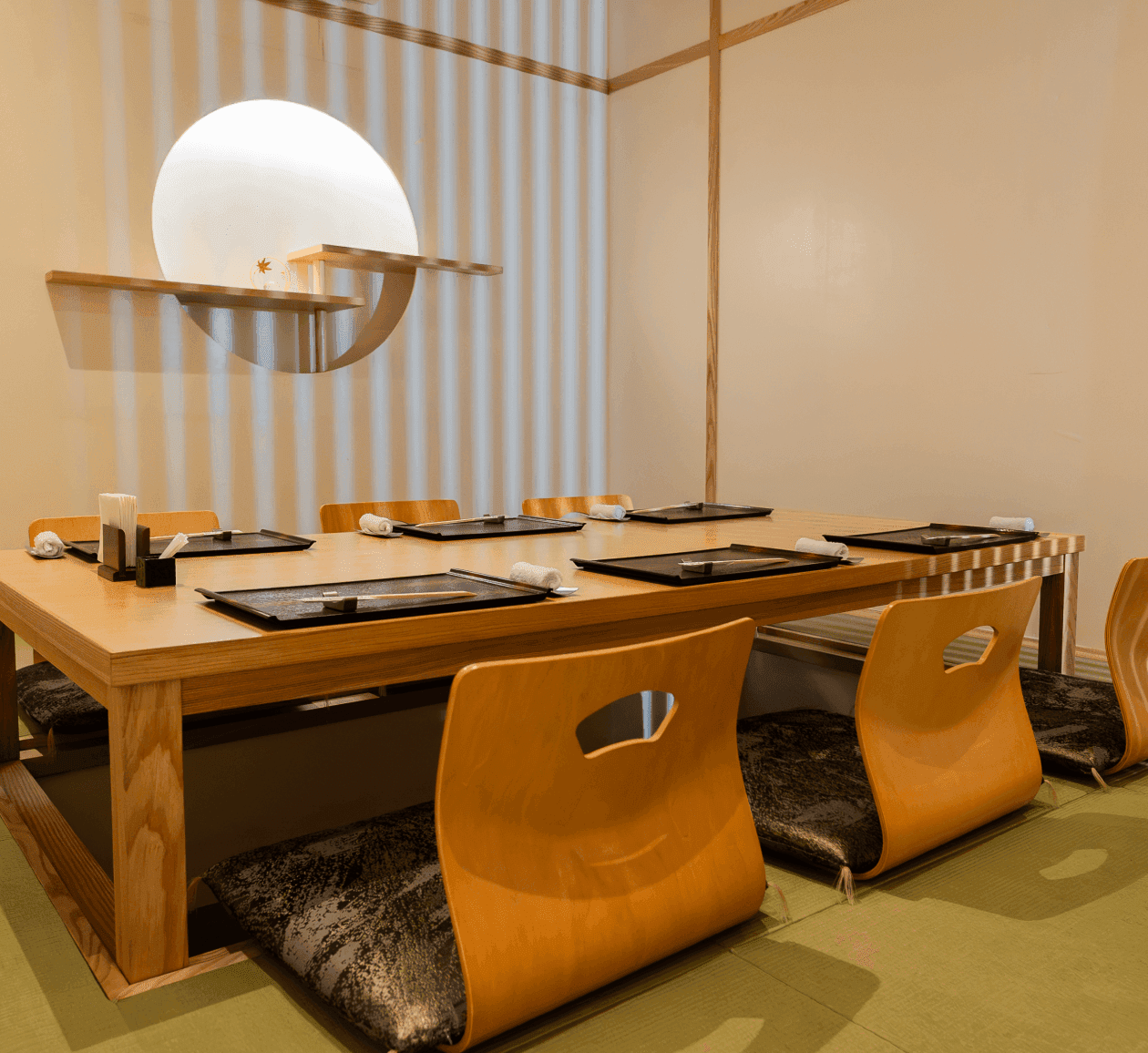
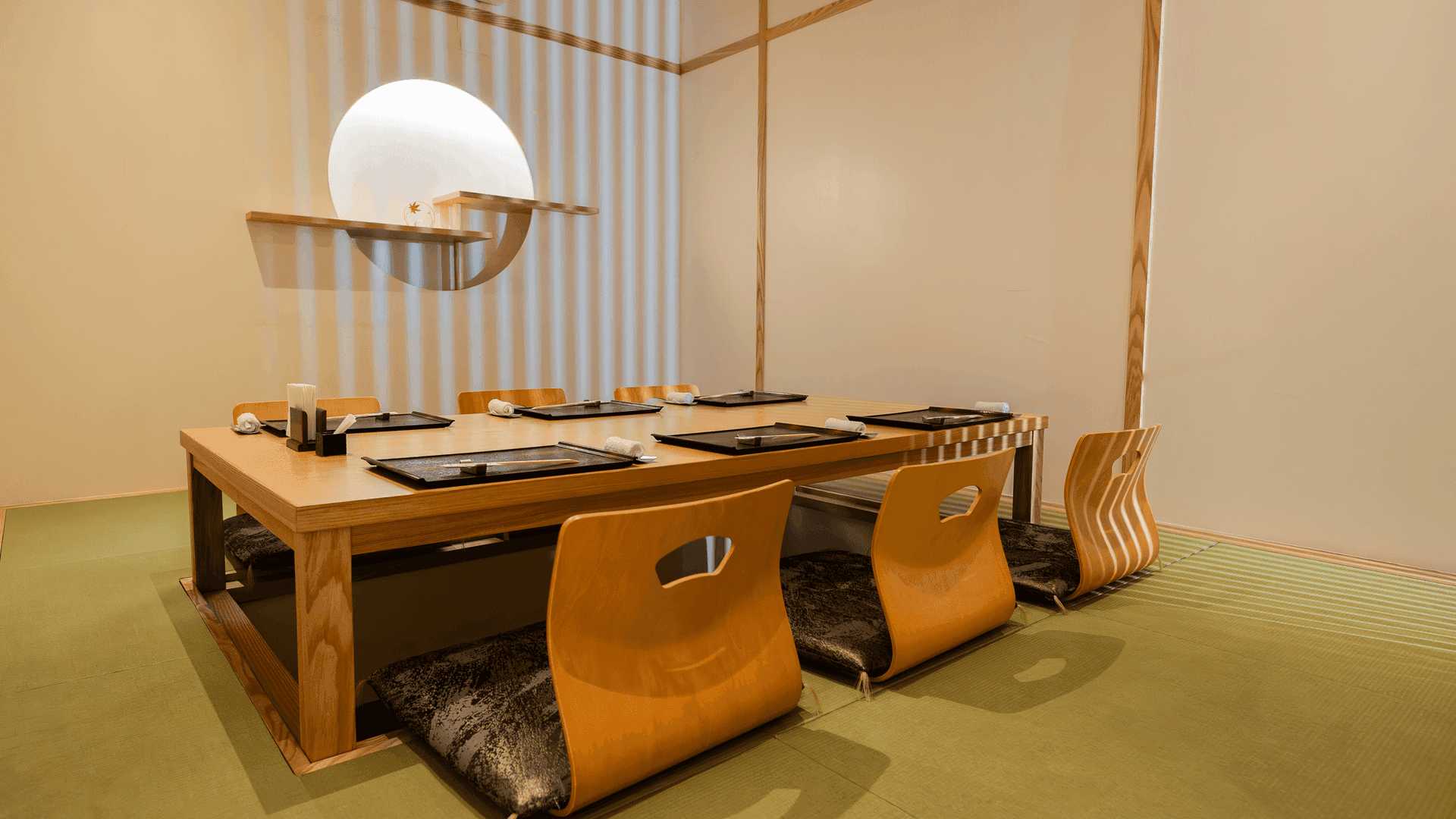
- Hold the room. Send the date, the headcount, and whether you need a VIP room (6–8, sliding doors) or a tatami room (4–8, shoes off).
- Set one kaiseki course for the whole table, at least two days ahead, from ₱8,000 per guest, VAT included.
- Seat the guest of honour at kamiza; the host takes shimoza, nearest the door.
- Decide drinks before anyone sits: sake by the bottle from our list, or corkage at ₱1,000 a bottle.
- Time a two-hour meal against Makati traffic and a 23:00 close (24:00 Friday and Saturday).
- Settle the balance at the restaurant. The 5% deposit is already down. Ask about receipt format when you book.
Book the room before you choose the menu (why the room decides the evening)
The room decides who can hear the conversation, whether shoes come off, and how many people you can invite. The menu comes second.
| Room | Capacity | Use |
|---|---|---|
| VIP room (×3) | 6–8 | Client dinners, board meals; sliding doors |
| Tatami room | 4–8 | Japanese guests; shoes off |
| Large hall | 16, or two rooms of 8 | Company tables |
| Sushi counter | 11 | Omakase, not a hosted board |
A VIP room is the usual choice for client entertainment: conversation stays in the room. Whole-restaurant buyout is quoted on request. There is no per-head minimum spend; a 5% deposit of the estimated bill holds the room. Where another house sets a floor on the bill, ask whether it is per head or per room; we do not publish one. Eight guests fit one VIP room. Ten need the hall or two rooms. To hold a date, reserve a private room or message us the date and pax.
One course for the table — and what that does to the pace and the bill
Order one course for everyone. The kitchen then fires in sequence. Nobody waits on a neighbour’s à la carte, and you know the food number before the first pour.
From the menu:
| Course | Per guest | What you are buying |
|---|---|---|
| Kaede 楓 | ₱8,000 | Starter, clear soup, three fish from Japan, Japanese beef, simmered seafood, rice, pickles, red miso, fruit |
| Sakura 桜 | ₱12,000 | A longer sequence, closing with the chef’s paper hot pot (kaminabe) |
| Sushi Kaiseki 上 | ₱8,000 | Nigiri inside a kaiseki sequence |
| Sushi Kaiseki 特上 | ₱10,000 | Premium-grade toppings from the day’s fish |
Prices in Philippine pesos. VAT included. A 10% service charge is added at the restaurant. Courses need two days’ notice; ingredients change with the season. À la carte (sashimi ₱2,500–₱3,400, wagyu steak 160g ₱2,700) slows a mixed table. For a hosted dinner, one course is the cleaner instrument. Kazunori, also on Chino Roces, is listed from ₱5,500 per head by a Makati dining guide — a counter house, not a board table. A shared pot is the Sakura course, or a seasonal nabe quoted when you book. There is no standing shabu-shabu or sukiyaki menu.
Seating: where the guest of honour sits, where the host sits
Put the guest of honour at kamiza — furthest from the door, back to the wall. You sit at shimoza, nearest the door, where you can receive staff and late arrivals without making the guest turn. In a VIP room the sliding door is the reference; in a tatami room, shoes come off before anyone crosses the threshold. Seating, pouring and greeting notes are in hosting Japanese guests in Manila.
Drinks: sake by the bottle, corkage ₱1,000, and how to keep pouring from becoming the evening
A curated sake list is available. Tell us the course and we send bottles, not an open tab. If you bring your own, corkage is ₱1,000 per bottle. Name the number of bottles when you book, and tell the floor you will call for the next one. Pouring is hospitality; an open-ended round is a second bill. Confirm the drinks line on the estimate so the 5% deposit is not calculated on food alone.
Paying without a scene
The deposit is 5% of the estimated bill. Staff send bank-transfer or GCash instructions within 24 hours. The balance is settled at the restaurant. Tell us when you book that you are the host who pays, and ask how you would like that handled so it does not interrupt the table. Ask then about the receipt format you need. Confirm the estimate before the deposit goes out, so the number you brief internally is the number that arrives — plus the 10% service charge added at the restaurant. The 5% is already down; the night is a balance, not a negotiation.
Timing a two-hour dinner around Makati traffic and a 23:00 close (Fri/Sat 24:00)
We are open Tuesday to Sunday, 11:00–23:00; Friday and Saturday until 24:00; closed Monday. A hosted kaiseki of this length runs about two hours. On a weekday, a 19:00 sit-down finishes near 21:00. A 21:00 start presses 23:00; confirm last seating when you book.
Allegro Center is about ten minutes by car from the Makati CBD in light traffic, near Magallanes MRT, with parking at the building. Evening Chino Roces is not light — leave earlier than the map suggests, and tell us if the principal will be late so we do not fire the first plate for an empty kamiza. Smart casual is recommended. Tatami rooms are shoes-off; say so in the invitation if that is the room. A corporate dinner on a clock should sit earlier, not later. We cannot hold a room past close.
A worked example: eight guests, ₱8,000 per head, one VIP room — the whole evening on one page
Occasion: client dinner, one principal plus seven. Room: one VIP room (fits 6–8). Course: Kaede 楓 for the table, reserved two days ahead. Sit-down: 19:00 on a weekday.
| Line | Amount |
|---|---|
| Kaede 楓 × 8 | ₱64,000 |
| VAT | Included |
| 10% service charge, added at the restaurant | ₱6,400 |
| Food total | ₱70,400 |
| Food per guest, after service | ₱8,800 |
| 5% deposit on a ₱64,000 food estimate | ₱3,200 |
| Balance on food, settled at the restaurant | ₱67,200 |
| Corkage, if you bring two bottles | ₱2,000 |
| House sake | Quoted when you book |
Drinks sit on top of ₱70,400. If the estimate should include them — and whether corkage sits inside it — say so when you enquire. The evening on one page: ₱3,200 to hold the room; Kaede for eight; principal at kamiza, host at shimoza; bottles named in advance; 19:00 sit, two hours, weekday close 23:00; building parking; balance settled at the restaurant after the guests have stood up.
What to send us when you enquire
Message us on Messenger, call +63 917 109 6032 or +63 2 7121 5200, email daimasumakati@gmail.com, or use the corporate dining page with:
- Date and arrival time
- Headcount, and who the guest of honour is
- VIP, tatami, hall, or “propose the room”
- Budget per guest, or a named course (Kaede ₱8,000, Sakura ₱12,000, Sushi Kaiseki ₱8,000 / ₱10,000)
- Drinks: house sake, or corkage and how many bottles
- That the host pays, and the receipt format you need
- Dietary notes to confirm against the season
Kaiseki needs two days. A 5% deposit holds the room. If the date is already firm, reserve a private room.
Questions this guide gets asked
Is there a minimum spend on a VIP room for eight?
No. There is no per-head minimum spend. A VIP room for 6–8 is held with a 5% deposit of the estimated bill; staff send bank-transfer or GCash instructions within 24 hours, and the balance is settled at the restaurant.
Does the ₱8,000 Kaede price include the 10% service charge?
VAT is included in the ₱8,000. The 10% service charge is added at the restaurant, so eight Kaede courses are ₱64,000 for food and ₱6,400 service — ₱70,400 before drinks.
For eight clients, should I book a VIP room or the large hall?
Eight fit one VIP room (6–8, sliding doors). The large hall seats 16, or divides into two rooms of 8. Tatami rooms also seat 4–8, shoes off. For a board dinner or client table, the VIP room is the usual choice.
If we bring two bottles, what does corkage add to the bill?
Corkage is ₱1,000 per bottle, so two bottles add ₱2,000. Say when you book whether that line should sit inside the estimated bill — and therefore inside the 5% deposit.
What time should a two-hour client dinner start on a weekday?
We close at 23:00 Tuesday to Thursday and Sunday (24:00 Friday and Saturday). A two-hour dinner that sits at 19:00 finishes with time in hand. A later start should be confirmed so the last plate is not racing the close. The restaurant is about ten minutes by car from the Makati CBD in light traffic; evening Chino Roces is not light.