Hosting Japanese guests in Manila: dinner etiquette that matters
The evening succeeds when the room is closed, the guest of honour sits farthest from the door, and you have already named the course. This is practical etiquette for a Filipino or expat host taking Japanese visitors to dinner in Manila — with Daimasu's rooms and prices where they help you book.
6 min read
Short answer
A Japanese business dinner is a kaishoku (会食): a meal used to tend a relationship, not only to eat. Book a closed room, give the guest of honour the seat farthest from the door, and order one course for the table. At Daimasu in Magallanes, tatami rooms hold 4–8 guests (shoes off), VIP rooms hold 6–8, and kaiseki courses start at ₱8,000 per guest with two days' notice. There is no per-head minimum spend; a 5% deposit of the estimated bill holds the room. Staff speak Japanese and English.
A Japanese guest in Manila is not scoring the city's restaurants. They are reading the room: a closed door, a seat away from the floor traffic, a meal that arrives as one sequence. Get those three right and the rest of the evening is conversation.
Why the room matters more than the restaurant
Kaishoku (会食) is a meal held to tend a relationship. The food is the setting, not the agenda.
A counter omakase is a public rhythm — fine for a small, informal table. For a client, a visiting director or a board guest, a closed room is the usual custom.
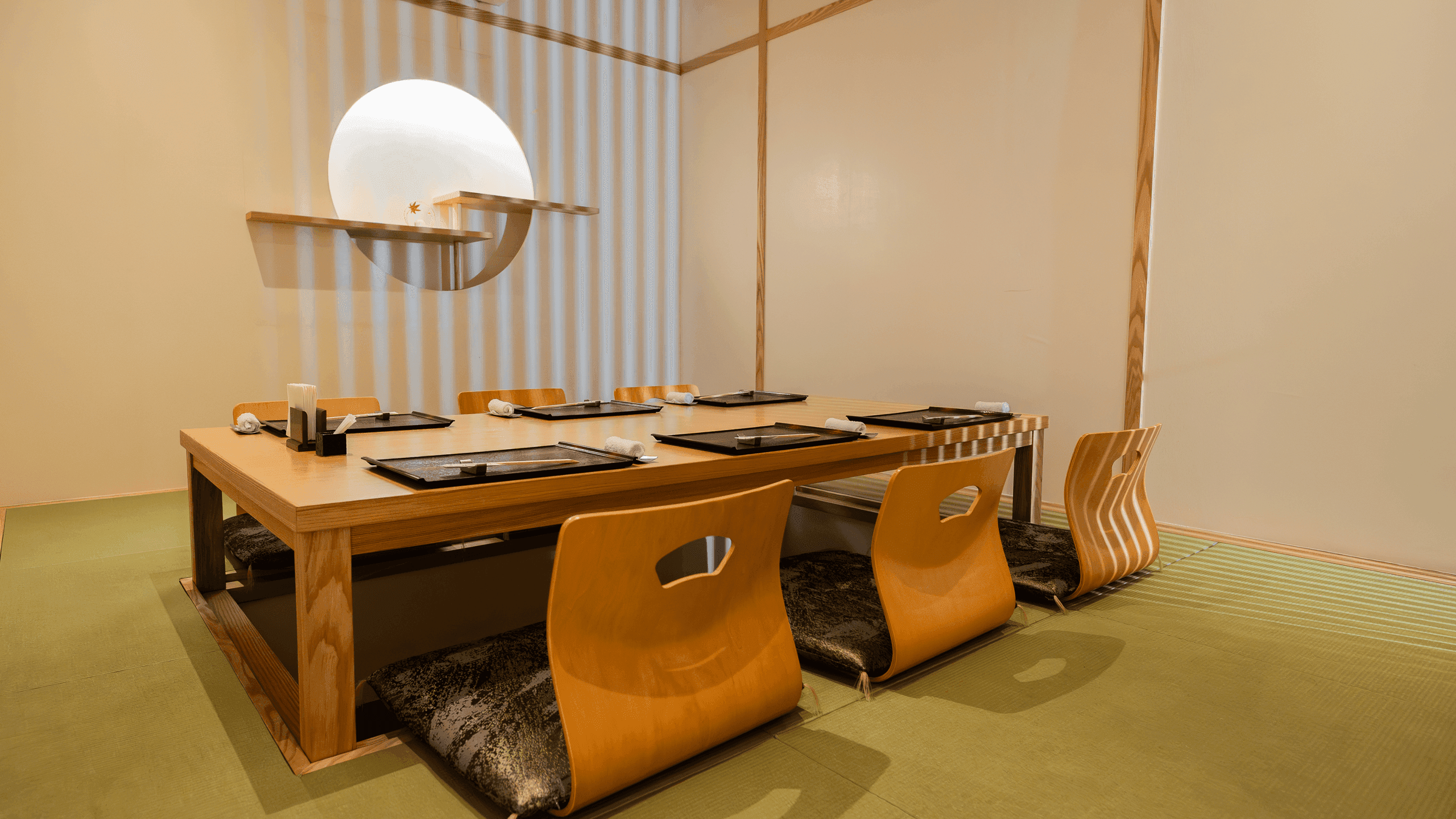
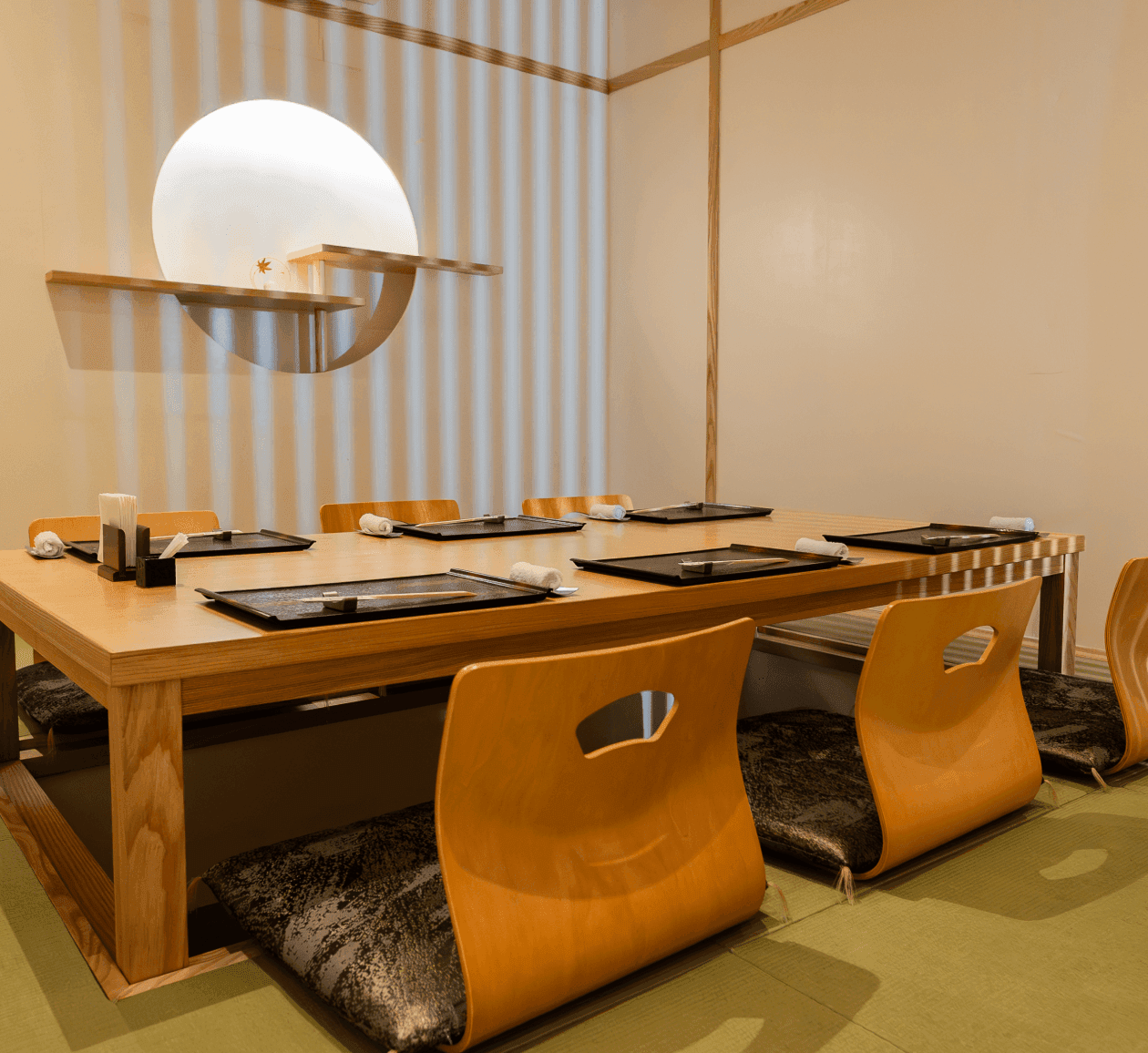
At Daimasu, private rooms close with sliding doors. Tatami rooms hold 4–8 guests (shoes off). VIP rooms hold 6–8. The large hall holds 16, or divides into two rooms of 8. The sushi counter has 11 seats. There is no per-head minimum spend. A 5% deposit of the estimated bill holds the room.
Company tables start with corporate dining and the host guide for client dinners in Makati. Some houses run a minimum spend on a private room; Daimasu does not publish one. Ask each restaurant which it is, and confirm the deposit and the course when you book.
Seating order without the anxiety
Kamiza (上座) is the seat of honour: farthest from the door. Shimoza (下座) is nearest the door. The guest of honour sits at kamiza. The host usually sits at shimoza, by the door, where the bill can be handled without a performance. Seat the next most senior Japanese guest beside the guest of honour.
The interpreter does not take kamiza. Seat them where they hear both sides without displacing the guest — often immediately beside the guest of honour, or between guest and host. Tell the restaurant the interpreter is coming so the table is not rearranged in front of everyone.
On a Western table the same map applies: door, far wall, guest of honour, host. If you are unsure, sketch the table, mark the door, and send it with the booking. Customs vary by company.
Let the host order the course — and say the budget out loud beforehand
In Japanese business dining, the host orders. One course for the whole table keeps the pace together. Say the budget in the booking, not at the table. It is how the kitchen composes one meal.
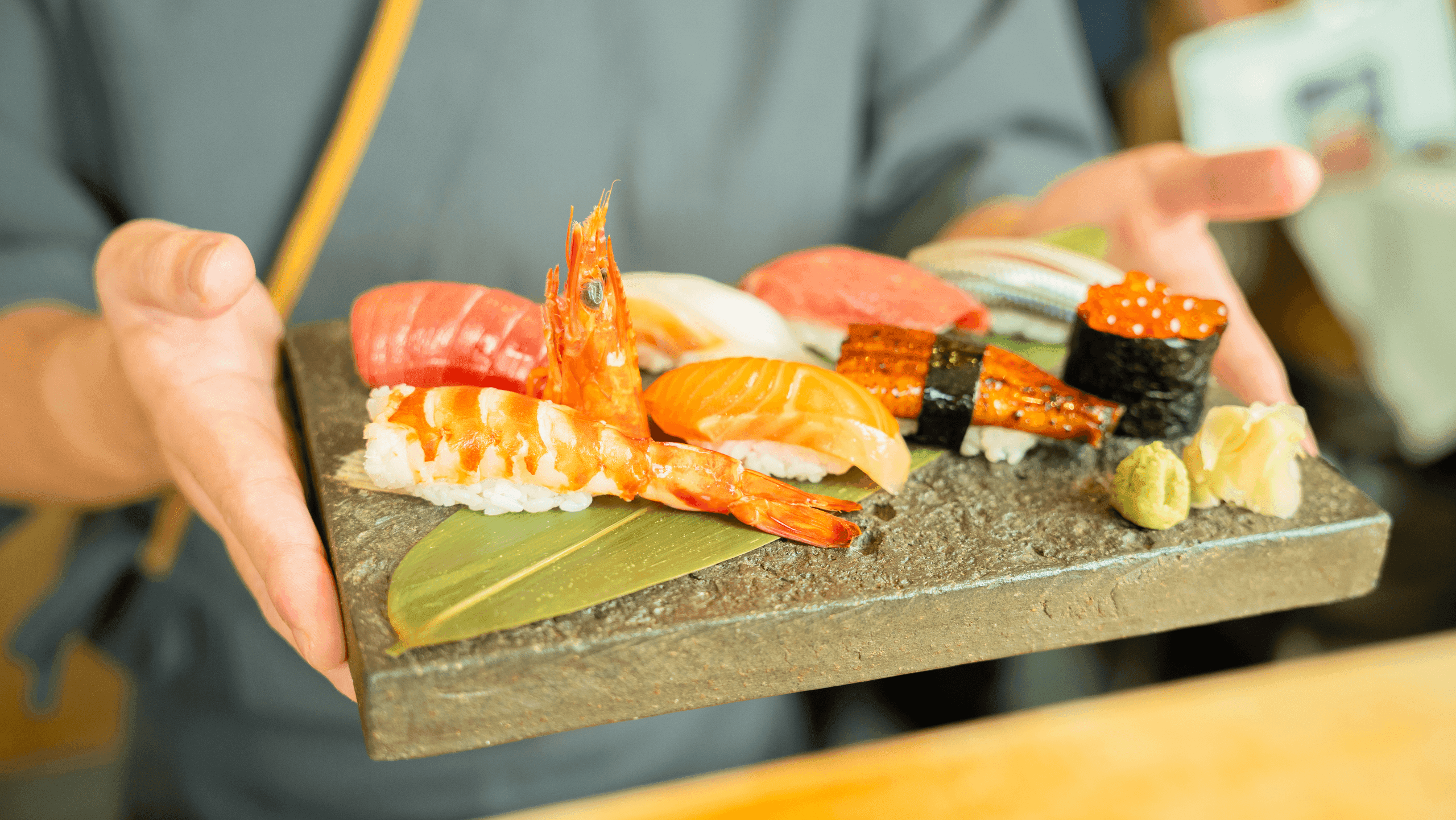
At Daimasu, kaiseki courses are Kaede at ₱8,000, Sakura at ₱12,000, and Sushi Kaiseki at ₱8,000 or ₱10,000 per guest. Prices include VAT; 10% service charge is added at the restaurant. Courses need two days' notice. Compare sequences in the kaiseki guide.
Sakura includes the chef's paper hot pot (kaminabe). There is no standing shabu-shabu or sukiyaki menu. A seasonal nabe for a private-room group can be arranged on request; ask when you book and take the quote. If someone cannot eat raw fish, say so in advance and confirm what the kitchen can do that day.
À la carte is available when the table is informal: sashimi assortments ₱2,500–₱3,400; sushi platters ₱2,800 (eight pieces) and ₱3,500 (ten). Patikim, a Makati dining guide, lists Kazunori's omakase from ₱5,500 per head — a counter evening, not a closed-room dinner.
Pouring, toasting and knowing when the evening is over
Wait until glasses are charged. The host, or the most senior person, offers kanpai (乾杯). Drink after the toast, not before.
A common custom is to pour for other people and to let them pour for you. Hold the glass with both hands when a senior guest pours. Top glasses up before they sit empty. If a guest rests a hand over the glass, they are pacing themselves; leave it. Do not assume the restaurant will manage the pouring. Staff at Daimasu speak Japanese and English; how drinks are poured is your table's custom.
Kaiseki tells you when the evening is ending. After the savoury dishes — and, on Sakura, after the paper hot pot — seasonal rice, pickles and red miso arrive. That rice course is the signal: the meal is closing. Do not order more sashimi after rice.
When the senior guest stands, the table stands. Settle the bill as the host, away from the guest if you can. Ask in the booking to bring the bill to you, not to the middle of the table.
Shoes, socks and the tatami room
Tatami rooms at Daimasu are shoes-off. Slippers stay at the step. Do not walk on tatami in slippers or outdoor shoes. Wear socks without holes; dark, plain pairs are enough. Bare feet at a business table look unfinished. If sitting on the floor will be hard for anyone in the party, say so when you reserve and ask which room will be more comfortable. VIP rooms hold 6–8 behind sliding doors.
Seiza (kneeling on the shins) is a custom, not an endurance test. Many Japanese guests sit with legs folded to the side on a long dinner. Do not instruct anyone to kneel. Smart casual is recommended; intact socks matter more than a tie.
Gifts: when a small omiyage helps and when it does not
Omiyage (お土産) is a small souvenir, usually food, given with both hands at the greeting. It is a custom of thoughtfulness, not a substitute for paying the bill. It helps when guests have flown in, when it is a first meeting, or when you are thanking them after a visit to your office. Choose something modest, individually wrapped, and easy to pack. Avoid sets of four (the reading shi overlaps with the word for death), clocks, blades, and anything that must be opened at the table.
Skip it for a regular monthly dinner, when compliance treats personal gifts as a problem, or when the object is expensive enough to create an obligation. If you are paying for kaiseki, the dinner is already the hospitality. If they give you something, receive it with both hands. Do not open it unless they ask.
Ten words that make the evening easier
| Japanese | Reading | Meaning |
|---|---|---|
| 会席 | kaiseki | A multi-course meal served in sequence to the whole table |
| おまかせ | omakase | “I leave it to you” — the kitchen chooses, often at a sushi counter |
| お造り | otsukuri | The sashimi course, plated as part of kaiseki |
| 紙鍋 | kaminabe | Paper hot pot; at Daimasu, the nabe course inside Sakura kaiseki |
| 上がり | agari | The hot tea that signals a sushi meal is finished |
| おしぼり | oshibori | The wet towel brought at the start; for hands |
| 乾杯 | kanpai | The toast before the first drink |
| ごちそうさま | gochisousama | Said at the end: thank you for the meal |
| 上座 | kamiza | Seat of honour, farthest from the door |
| 下座 | shimoza | Seat nearest the door, usually the host |
What to tell the restaurant in advance
- Date, arrival time and headcount.
- That you are hosting Japanese guests.
- The guest of honour's name, and whether an interpreter is coming.
- Room: tatami (4–8, shoes off) or VIP (6–8).
- One course and the budget per guest — Kaede ₱8,000, Sakura ₱12,000, or Sushi Kaiseki ₱8,000 / ₱10,000.
- Dietary notes, with a request to confirm what the kitchen can do.
- A bottle you are bringing, if any (corkage ₱1,000).
- How you want the bill presented to the host.
Kaiseki needs two days. Book through the private dining page, Messenger, or +63 917 109 6032. Magallanes is about ten minutes by car from the Makati CBD, with building parking. Staff speak Japanese and English; about us is the short version of the house.
Questions this guide gets asked
Should I book a tatami room or a VIP room for Japanese clients?
Tatami rooms at Daimasu hold 4–8 guests and are shoes-off. VIP rooms hold 6–8 and close with sliding doors. A tatami room is often the more familiar setting for Japanese guests; if anyone in the party would rather not sit on the floor, ask when you book which room will be more comfortable. There is no per-head minimum spend on either.
Where does an interpreter sit at a Japanese business dinner?
By custom, the interpreter does not take the kamiza — the seat farthest from the door, kept for the guest of honour. Seat them where they can hear both the guest and the host. Tell the restaurant that an interpreter is coming so the table is not rearranged in front of the guest.
Is it rude to name a per-guest budget when booking a kaiseki course?
Naming the budget is ordinary hosting, not a slight. It lets the kitchen set one course for the whole table. At Daimasu the published courses are Kaede ₱8,000, Sakura ₱12,000 and Sushi Kaiseki ₱8,000 or ₱10,000 per guest, VAT included, plus 10% service charge, reserved two days ahead.
If I am paying for dinner, do I still bring omiyage?
Not as a rule. A small, individually wrapped souvenir can help on a first visit or when guests have travelled from Japan. It is unnecessary for a regular table, and an expensive gift can create an obligation. The dinner itself is the hospitality.