Kaiseki in Manila: the courses, the prices, how to order
You need the sequence, the published prices, and the two-day lead time before you book a Japanese course dinner in Makati. This page walks Kaede and Sakura as they are printed, then Sushi Kaiseki, whose composition is not published.
8 min read
Short answer
Kaiseki is a set Japanese course in a named sequence. Kaiseki-ryori is the banquet form most Manila restaurants serve. Omakase is a different idea: the chef chooses, usually sushi at a counter. At Daimasu in Magallanes, Makati, the published courses are Kaede at ₱8,000 per guest, Sakura at ₱12,000, and Sushi Kaiseki at ₱8,000 or ₱10,000. Reserve at least two days ahead. VAT is included; 10% service charge is added at the restaurant.
Kaiseki in Manila is a set Japanese course at a set price per guest, served in a named order. It is not a spread you build from the à la carte page. It is not omakase.
At Daimasu in Magallanes, Makati, three published prices cover the table: Kaede 楓 at ₱8,000, Sakura 桜 at ₱12,000, and Sushi Kaiseki at ₱8,000 or ₱10,000. VAT is included; 10% service charge is added at the restaurant. Reserve at least two days ahead and order one course for everyone. The printed compositions are on the menu.
What kaiseki is — and what it is not
Kaiseki (懐石), kaiseki-ryori (会席料理) and omakase (お任せ) are three different words. Manila search results often treat them as one.
Kaiseki, written 懐石, is the tea-ceremony meal: a few small seasonal dishes, then matcha. Kaiseki-ryori, written 会席料理, is the banquet course served with sake — starter, soup, sliced fish, grilled, fried, simmered, sometimes a pot, then rice, then a sweet. That banquet form is what a Japanese course menu in Metro Manila usually means. Omakase means “I leave it to you.” It is a method, not a sequence. In Makati it usually means sushi, one piece at a time, at a counter. Daimasu publishes those prices separately; see omakase in Makati.
Kaede and Sakura are kaiseki-ryori: a published list, one pace for the table, fish and wagyu flown in from Japan, ingredients that change with the season and the market. Sushi Kaiseki puts a chef’s selection of nigiri inside a kaiseki sequence; the course list itself is not published.
The sequence, course by course
The classical order is sakizuke → wanmono → mukouzuke → yakimono → agemono → takiawase → nabemono → gohan → kanmi. Sakura walks that full line. Kaede skips agemono and nabemono. Sushi Kaiseki does not publish this breakdown; do not assume it matches either list. What follows is the English as printed for Kaede and Sakura.
Sakizuke — the opening
Sakizuke (先付) is the first plate.
Kaede lists Seasonal two pieces assortment (Two of our Chef's Seasonal Selections) — 季節の二点盛. Sakura lists Seasonal three pieces assortment (Three of our Chef's Seasonal Selections) — 季節の三点盛. The extra piece is the first change at ₱12,000. The pieces change with the season; the count does not. Photos are for reference.
Wanmono — clear soup
Wanmono (椀物) is Clear soup — 澄まし仕立て — on both courses. It is a short, hot pause after the starter, not the red miso that arrives with rice.
Mukouzuke — three pieces of fish from Japan
Mukouzuke (向付) is the sliced-fish course. Both Kaede and Sakura list Three pieces fish from Japan — 日本からの魚三点盛. Fish is flown in from Japan. The three kinds are not named in advance; they follow the market. If a guest does not eat raw fish, say so when you book.
Yakimono — the grill
Yakimono (焼物) is the grilled course, and the two menus part here.
Kaede lists Japanese beef — 日本産和牛. Sakura lists Seasonal seafood grill or WAGYU steak — 季節の海鮮焼、和牛ステーキ. Wagyu is flown in from Japan. Sakura’s grill is a choice; Kaede’s beef is not printed as steak.
Agemono — fried seafood (Sakura only)
Agemono (揚物) is the fried course. Sakura lists Fried seafood — 海鮮かわり揚げ. Kaede has no agemono line. If you want a fry in the sequence, take Sakura.
Takiawase — cooked seafood
Takiawase (炊合せ), labelled 煮物 on the course, is Cooked seafood — 魚介の炊合せ — on both Kaede and Sakura. Simmered, not grilled, not fried. On Kaede this is the last savoury plate before rice. On Sakura it is the plate before the pot.
Nabemono — the chef's paper pot (Sakura only)
Nabemono (鍋物) is the hot-pot course. Sakura lists Chef's favorite paper pot — シェフこだわりの紙鍋. That is kaminabe, the 鍋物 inside Sakura, not sold on its own. There is no standing shabu-shabu or sukiyaki menu. A seasonal nabe for a private-room group can be arranged on advance request and is quoted when you book. Kaede has no nabemono line.
Gohan — rice, pickles, red miso
Gohan (飯物) is Seasonal rice — 季節のご飯 — then Pickles (香の物) and Red miso soup (赤だし). Both courses close the savoury meal this way. Rice is the signal that the mains are over.
Kanmi — seasonal fruit
Kanmi (甘味) is Seasonal fruit — 季節のフルーツ — on both courses. That is the published dessert.
Kaede ₱8,000 vs Sakura ₱12,000 vs Sushi Kaiseki ₱8,000 / ₱10,000
Per guest. VAT included; 10% service charge added at the restaurant. Sushi Kaiseki’s course list is not published, so the last two columns stay blank on purpose.
| Course | Kaede 楓 ₱8,000 | Sakura 桜 ₱12,000 | Sushi Kaiseki 上 ₱8,000 | Sushi Kaiseki 特上 ₱10,000 |
|---|---|---|---|---|
| Sakizuke 先付 | Seasonal two pieces assortment (Two of our Chef's Seasonal Selections) | Seasonal three pieces assortment (Three of our Chef's Seasonal Selections) | Not published | Not published |
| Wanmono 椀物 | Clear soup | Clear soup | Not published | Not published |
| Mukouzuke 向付 | Three pieces fish from Japan | Three pieces fish from Japan | Not published | Not published |
| Yakimono 焼物 | Japanese beef | Seasonal seafood grill or WAGYU steak | Not published | Not published |
| Agemono 揚物 | — | Fried seafood | Not published | Not published |
| Takiawase 煮物 | Cooked seafood | Cooked seafood | Not published | Not published |
| Nabemono 鍋物 | — | Chef's favorite paper pot | Not published | Not published |
| Gohan 飯物 | Seasonal rice, pickles, red miso soup | Seasonal rice, pickles, red miso soup | Not published | Not published |
| Kanmi 甘味 | Seasonal fruit | Seasonal fruit | Not published | Not published |
| What is published | Full sequence above | Full sequence above | Chef's selection of nigiri inside a kaiseki sequence | Premium-grade toppings from the day's fish |
What changes between Kaede and Sakura: a third starter; a grill that is seafood or wagyu steak rather than Japanese beef; fried seafood; and the paper pot. Soup, three pieces of fish from Japan, cooked seafood, rice, pickles, red miso and fruit are on both.
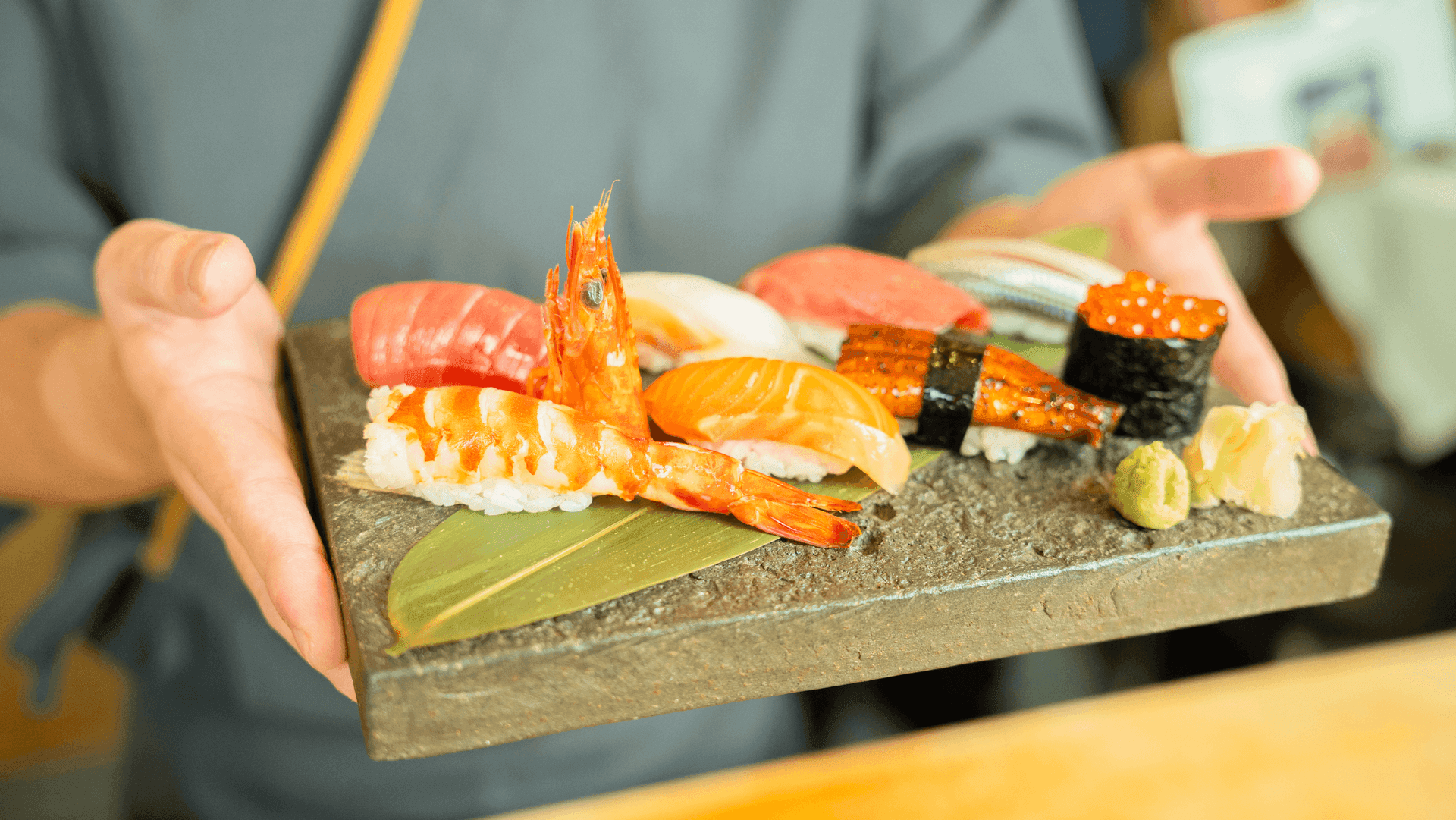
Sushi Kaiseki is a different product at the same ₱8,000 entry as Kaede. The 上 course is a chef's selection of nigiri inside a kaiseki sequence. The 特上 course at ₱10,000 uses premium-grade toppings from the day's fish. Neither publishes sakizuke through kanmi. If you need the written sequence, book Kaede or Sakura. If you want nigiri as the spine of the meal, book Sushi Kaiseki and ask what fish is in that day.
Why the whole table orders one course
The kitchen fires one sequence. Mixed Kaede and Sakura on one check puts fried seafood and kaminabe at some places and not others, and the host starts managing plates.
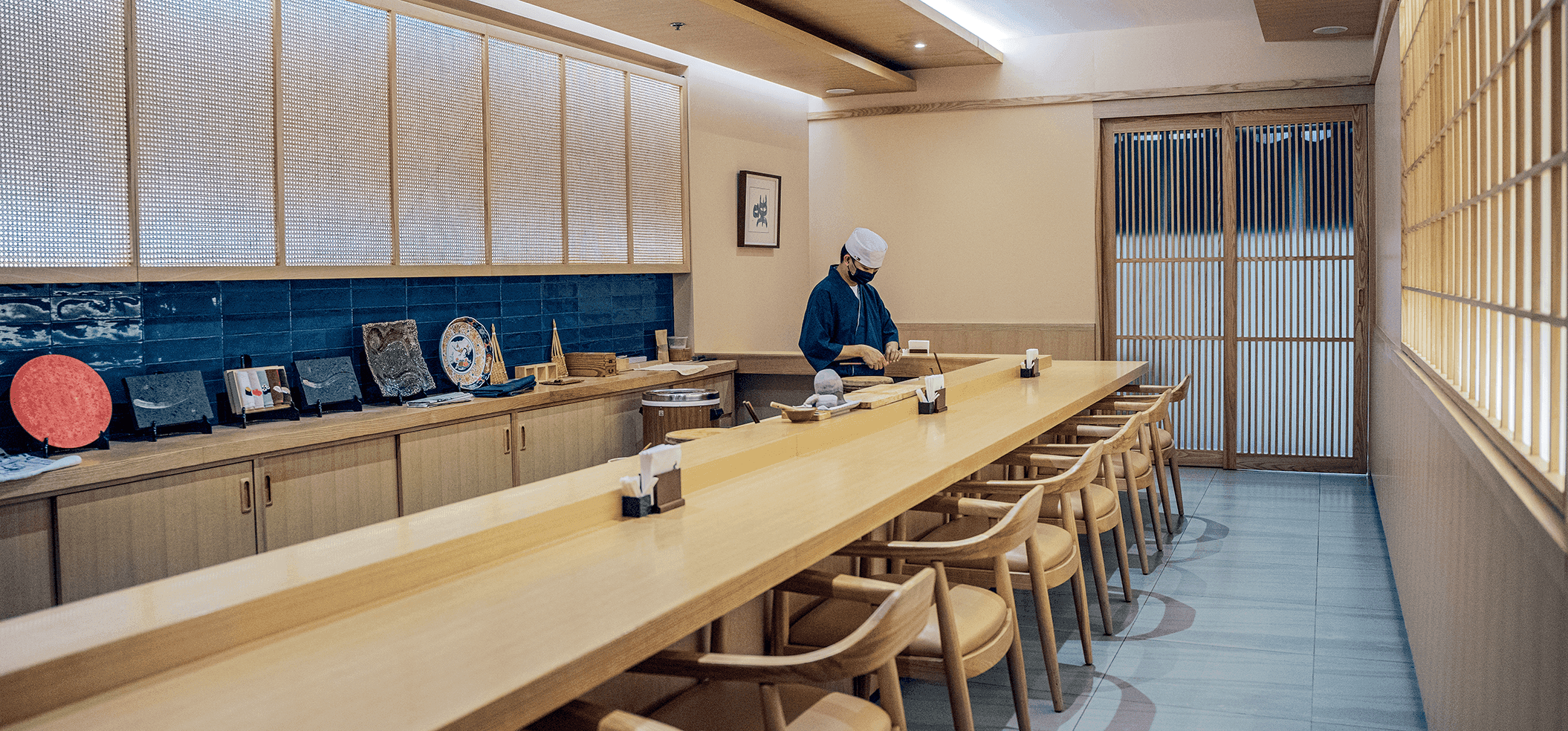
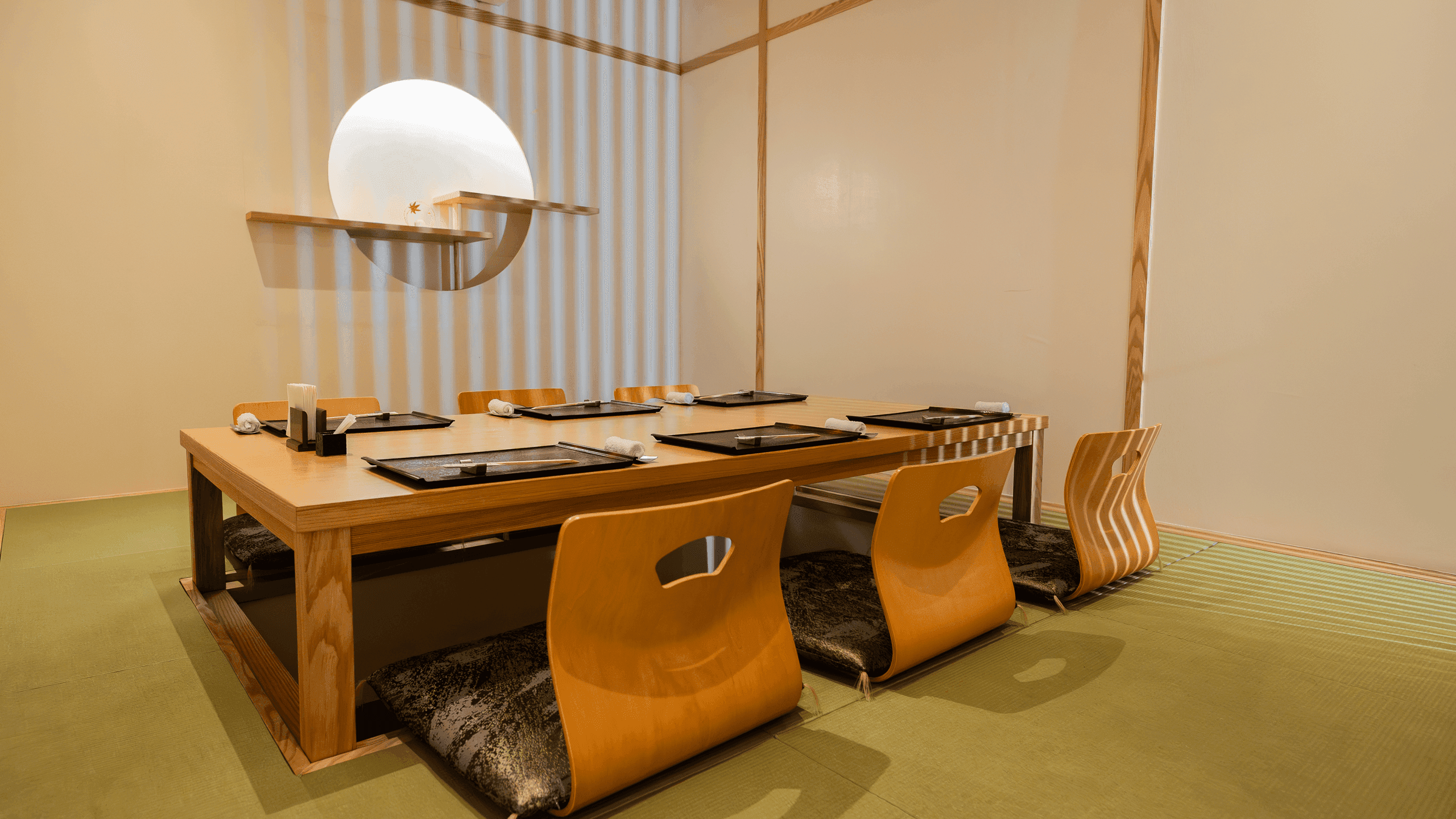
Daimasu serves Kaede, Sakura and Sushi Kaiseki to the whole table so the meal moves at one pace. The host does not take orders. For the person paying, see the client-dinner host guide. Company tables use the same courses; see corporate dining. Rooms are on private dining and our rooms: VIP rooms for 6–8, tatami rooms for 4–8 (shoes off), an 11-seat hinoki sushi counter, and a large hall for 16 that divides into two rooms of 8. There is no per-head minimum spend. A room is held with a 5% deposit of the estimated bill.
The two-day notice, and what the kitchen does with it
Kaiseki courses require reservations at least 2 days in advance. Ingredients may vary by season and market availability; photos are for reference.
Two days is the kitchen’s lead time, not a courtesy. Fish and wagyu are flown in from Japan. The starter, the three pieces of fish, the grill and the fruit are composed around that delivery. Sakura’s paper pot is prepared as a course, not pulled from a standing nabe menu. A seasonal nabe for a private-room group is quoted when you book.
For a table or room, a deposit of 5% of the estimated bill holds the booking. Staff send GCash or bank-transfer instructions within 24 hours; the balance is settled at the restaurant. If your date is inside two days, ask when you message — do not assume a same-day kaiseki.
The counter is a separate path. The kaiseki counter course at reserve.daimasu.com.ph is 8 courses, 90 minutes, 8 counter seats, seatings at 17:30 and 20:00, ₱8,000 per guest, a 50% deposit (full refund up to 48 hours before, 50% up to 24 hours), guests aged 12 and above. That is not the same document as Kaede or Sakura. Name the course and the room — or the counter seating — when you reserve.
Book through the reservation dialog, Messenger, or +63 917 109 6032. Give the date, the headcount, and Kaede, Sakura or Sushi Kaiseki.
Where else kaiseki is served in Metro Manila
Two sources a reader can open:
- Yamazato at Hotel Okura Manila serves kaiseki-ryori as the hotel’s Japanese restaurant. Current sets are on hotelokuramanila.com/dining/yamazato.
- In January 2023, SPOT.ph published a round-up of omakase and kaiseki restaurants in Manila. It still ranks for the query, and it does not walk a live course list with today’s prices: spot.ph, 11 January 2023.
Compare the printed sequence and the notice period. This is not a ranking.
Etiquette that actually matters at a course dinner
Three habits keep the table in time with the kitchen.
Pace. One course is on the table at a time. Wait until the last guest is served, then eat. Empty bowls go back so the next plate can leave the pass. If you need a pause for a toast, say so when you book.
Chopsticks on the rest. Use the hashioki. Do not lay chopsticks across a bowl, and do not stand them in the rice.
Rice is the end of the savoury meal. When seasonal rice, pickles and red miso arrive, the grill and the pot are finished. Eat the rice. Kanmi — seasonal fruit — follows.
Dress is smart casual. Tatami rooms are shoes-off. Private rooms close with sliding doors; take a room when the conversation needs to stay in the room.
To order: pick Kaede, Sakura or Sushi Kaiseki on the menu, take a room on private dining, and send the date at least two days ahead.
Questions this guide gets asked
Does the Kaede course include the chef's paper hot pot?
No. The paper pot is the nabemono course of Sakura only, listed as Chef's favorite paper pot, at ₱12,000 per guest. It is not sold separately. Kaede, at ₱8,000, has no nabemono line: after cooked seafood it moves to seasonal rice, pickles, red miso soup and seasonal fruit.
Can some guests order Kaede and others Sakura at the same table?
Book one course for the whole table. The kitchen serves Kaede, Sakura or Sushi Kaiseki as a single sequence so soup, grill and rice arrive together. Split tickets put the pot on some places and not others, and the meal loses its pace. Choose the course when you reserve.
What is in Sushi Kaiseki, course by course?
The composition is not published. Sushi Kaiseki at ₱8,000 is described as a chef's selection of nigiri inside a kaiseki sequence. Sushi Kaiseki Special at ₱10,000 uses premium-grade toppings from the day's fish. Ask for that day's fish when you book; do not assume it matches Kaede or Sakura.
Do the kaiseki prices include VAT and service charge?
Prices are per guest with VAT included. A 10% service charge is added at the restaurant. For a room, a deposit of 5% of the estimated bill holds the booking; staff send GCash or bank-transfer instructions within 24 hours, and the balance is settled at the restaurant. There is no per-head minimum spend on top of the course.
How do I book kaiseki for a private room instead of the counter?
Use the table or room reservation, not the counter checkout. Kaede, Sakura and Sushi Kaiseki are served in the VIP rooms (6–8), tatami rooms (4–8) and the large hall (16, or two rooms of 8). The separate kaiseki counter course at reserve.daimasu.com.ph is 8 seats, 8 courses, 90 minutes, ₱8,000 per guest, seatings at 17:30 and 20:00, with a 50% deposit and guests aged 12 and above. State the course and the room when you book, at least two days ahead.